
Corona treatment and dyne level are closely linked in web converting, printing, coating, and laminating. If surface energy is too low, inks and adhesives will not wet out or bond consistently. This guide explains what corona treatment is, what dyne level means, and how to evaluate treater roll performance.
What Is Corona Treatment?
Corona treatment is a surface preparation process used on films, plastics, paper, and other continuous webs before printing, coating, or laminating.
Many polymers naturally have low surface energy. That means inks and adhesives bead up instead of spreading evenly.
Corona treatment increases surface energy so liquids wet out and bond consistently.
What Is Dyne Level?
Dyne level is a practical measurement of surface energy.
Higher dyne level means better wetting and adhesion.
Most converters measure dyne level in dynes per centimeter. In practice, this is treated the same as millinewtons per meter.
If the surface energy is too low, you may see:
- Poor ink adhesion
- Lamination failure
- Coating defects
- Variation across web width
Typical Target Dyne Ranges
Target dyne level depends on:
- Substrate type
- Ink chemistry
- Adhesive system
- Coating requirements
As general starting points:
- Polyethylene and polypropylene: often 38–44 dynes per centimeter for printing
- PET: often 44–50 or higher depending on process
- Lamination applications: frequently 42–48 or higher
Final targets should be confirmed with your ink or adhesive supplier and verified on press.
How Dyne Level Is Tested
Most facilities use dyne pens or surface energy test solutions.
If the liquid draws a continuous line, the surface meets that dyne level.
If it beads or breaks apart, it does not.
Testing should be done:
- Across the web width
- After storage
- Before production runs
Why Dyne Level Can Drop Over Time
Treated surfaces can partially revert. Surface energy may decline after treatment depending on:
- Material type
- Additives
- Storage conditions
- Contamination
That is why timing, cleanliness, and handling procedures matter.
What Affects Corona Treatment Performance?
Several variables influence treatment quality:
- Line speed
- Power density
- Electrode condition
- Air gap consistency
- Web tension stability
- Contamination or additives
Inconsistent dyne across the web is often a combination of mechanical, electrical, and surface variables.
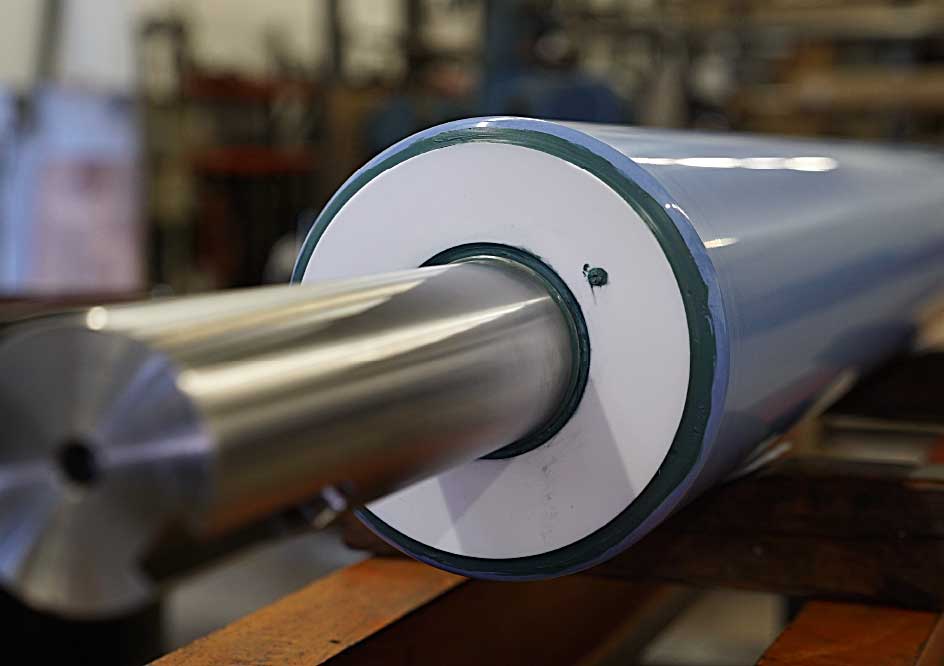
How to Specify a Corona Treater Roll
If you are requesting a new roll or resurfacing, we typically need:
- Face width
- Diameter
- Journal dimensions
- Core material
- Line speed range
- Substrate type
- Target dyne level
- Current issue such as arcing, streaking, uneven treatment, or wear pattern
Send your specifications and we will review your application.
When to Evaluate Your Treater Roll
You may want to review your roll surface if you are seeing:
- Increasing power draw
- Dyne variation across web width
- Frequent arcing
- Surface wear
- Adhesion inconsistencies
Proper dielectric surface design and durability play a major role in treatment uniformity and efficiency.
Talk to an Expert
If you are troubleshooting adhesion, inconsistent dyne levels, or evaluating a new treater roll, send us your roll specifications and process details – we will review your information and recommend next steps.