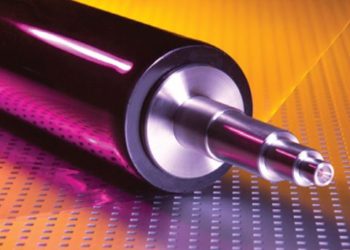
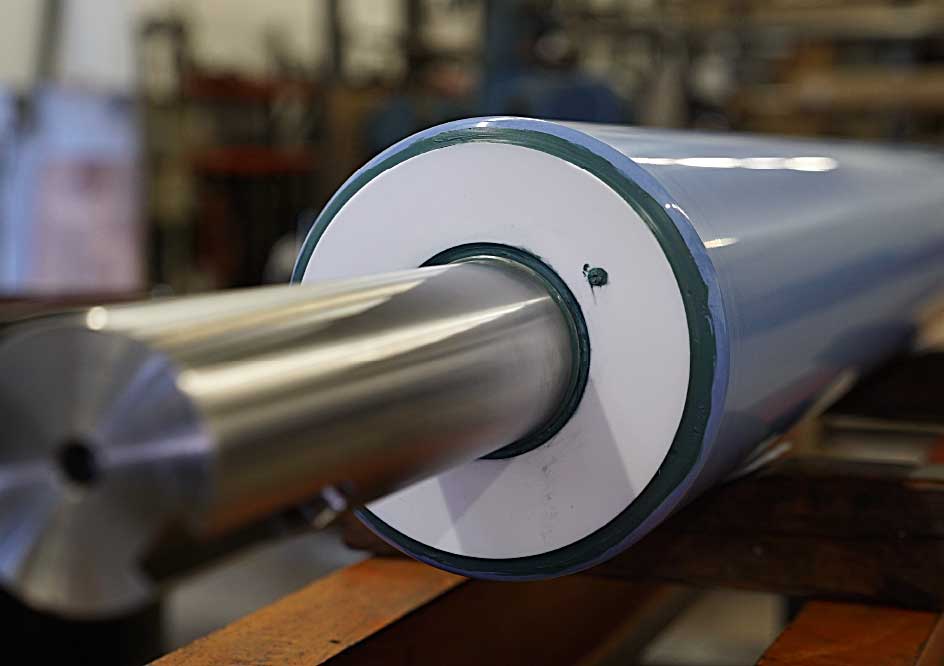

Hygienic roller surfaces are important in medical and pharma packaging because small surface changes can affect cleanability, contamination control, and process consistency. This guide explains what makes a roller surface hygienic, where these surfaces matter most, and what to include when requesting a recommendation.
Medical and pharma packaging lines are unforgiving. Small surface issues that might be “fine” in general converting can become real problems when you’re producing sterile barrier packaging, cleanroom products, or high-scrutiny lots.
This is where roller surface design matters. Not just for web handling, but for cleanability, contamination control, and process consistency.
What Hygienic Roller Surfaces Mean in Practice
A hygienic roller surface is designed to reduce contamination risk and stay stable under cleaning and process conditions.
In practice, that usually means the surface is:
- Smooth and non-porous
- Resistant to corrosion and chemical attack
- Easy to clean without degrading
- Low-shedding and stable over time
- Less likely to trap residue, moisture, or debris
It’s not just about the material. It’s about how the surface behaves after months of production and cleaning cycles.
Why Surface Finish and Geometry Matter
In medical and pharma packaging, contamination risk often comes from places that are hard to see:
- Microscopic surface pores that hold residue
- Roughness that traps particles
- Edges and transitions that collect buildup
- Worn zones that become harder to clean
Smooth, continuous surfaces are easier to clean and less likely to harbor residue. Many hygienic applications specify a tight surface finish requirement and avoid features that create traps or shadowed areas.
The Real Enemies: Cleaning Chemistry and Repeated Cycles
Medical and pharma lines often include frequent cleaning and wipe-downs. That introduces a different type of wear:
- Chemical exposure from cleaning agents
- Repeated wet/dry cycling
- Mechanical abrasion from wipes, pads, and web contact
- Temperature swings
A surface that performs well on day one can change after repeated cleaning. Swelling, softening, micro-cracking, or loss of finish can lead to more residue retention and more variability.
Common Failure Modes in Hygienic Packaging Lines
If you’re seeing any of these, the roller surface is worth evaluating:
- Residue that returns quickly after cleaning
- Unexplained particles or specks showing up downstream
- Streaks or bands that appear over time
- Changes in traction or web tracking after cleaning cycles
- Surface gloss or texture changing across the face
- Micro-pitting or corrosion marks
A lot of “quality issues” in hygienic packaging start as “surface stability issues.”
Where Hygienic Surfaces Are Most Critical
Not every roller has the same risk profile. Hygiene-sensitive surfaces typically matter most at:
- Contact points near the sterile barrier film or critical layers
- Nip points that control pressure and surface contact
- Areas with frequent cleaning access
- Zones where additives, coatings, or powders can build up
- Rollers that run warm or see chemical exposure
If a roller touches a critical surface, it should be treated as a critical surface.
How to Choose the Right Surface Approach
There isn’t one universal “medical-grade” roller. The right solution depends on your process.
Key inputs include:
- Web material and thickness range
- Line speed and tension profile
- Temperature range
- Cleaning agents used and cleaning frequency
- Chemical exposure from inks, coatings, adhesives, or vapors
- Traction requirements and release requirements
- Surface finish requirement and allowable runout
A good hygienic surface is one that stays consistent under your exact cleaning and operating conditions.
Spec Checklist for Medical and Pharma Packaging Rollers
If you want a fast, accurate recommendation, send:
- Application and roller position in the line
- Web material and thickness range
- Line speed range and typical tension
- Roll diameter, face length, and journal details
- Required surface finish and any traction requirements
- Temperature range at the roller
- Cleaning agents used and cleaning frequency
- Any coating, adhesive, or process chemistry exposure
- Current issues, such as residue, streaks, particles, or tracking problems
- Maintenance routine and typical service interval
The cleaning-agent list is especially important. Cleanability and chemical resistance are often the deciding factors.
The Goal: Stability and Cleanability Over Time
For hygienic packaging, you want surfaces that:
- Clean quickly and consistently
- Don’t change feel, finish, or behavior after cleaning cycles
- Resist corrosion and pitting
- Maintain uniform performance across the roll face
- Reduce the risk of contamination-related defects
When the surface stays stable, everything downstream gets easier.
Request a Quote or Surface Review
If you’re running medical or pharma packaging and dealing with residue, wear, particles, or inconsistent performance, send your roll specs and process details. We’ll review the application and recommend the right surface approach for cleanability and long-term stability.